Coalition urges repeal of nuclear moratorium to meet 2040 carbon-free goal
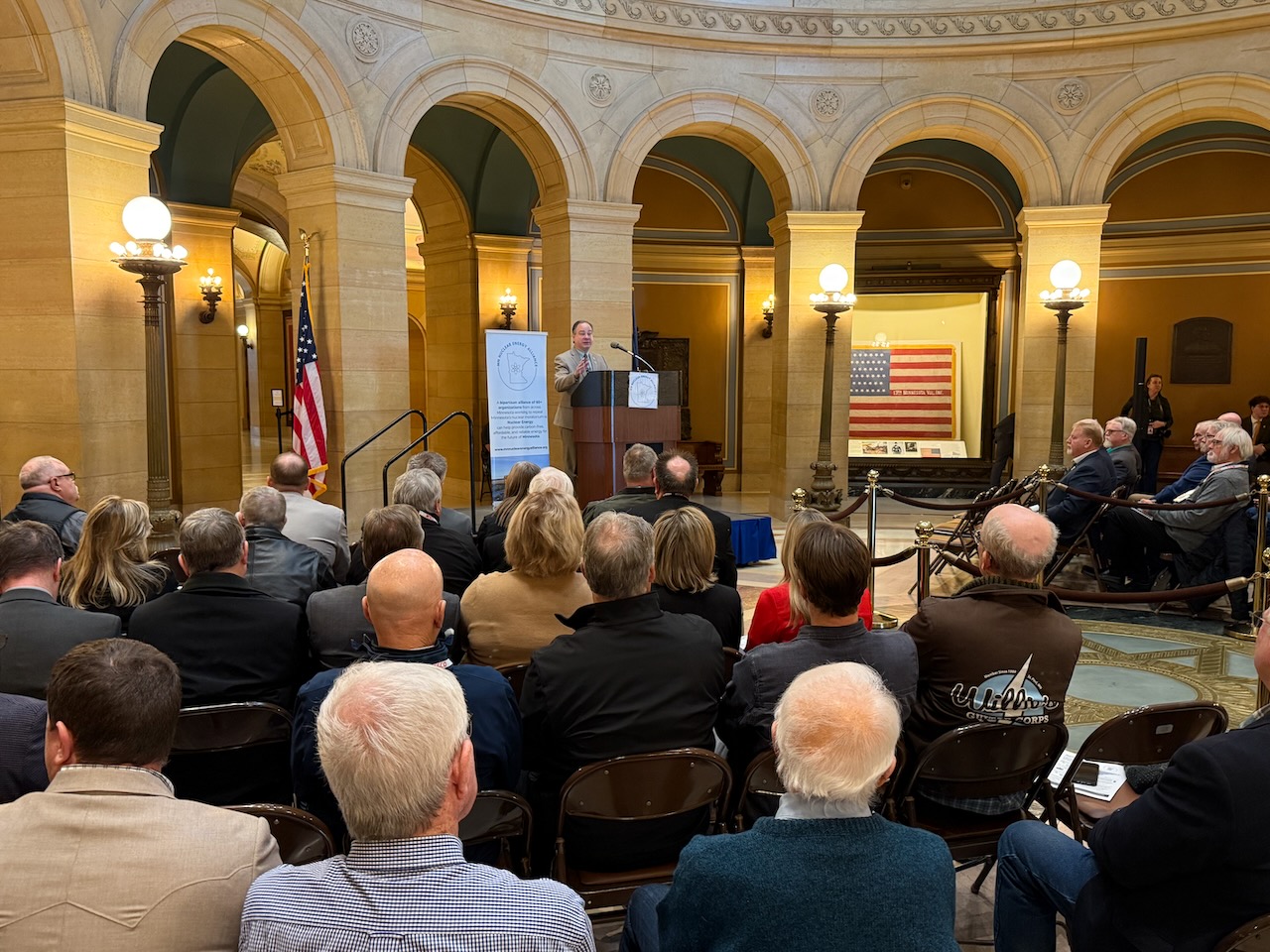
Lawmakers, energy leaders, labor representatives and community stakeholders made up those gathered as part of the Nuclear Energy Education Day, hosted by the Minnesota Nuclear Energy Alliance (MNEA).
The MNEA, a bipartisan alliance representing more than 60 organizations — including utilities, electric cooperatives, labor unions, local governments and other stakeholders — is urging lawmakers to repeal Minnesota’s moratorium on new nuclear construction. Speakers said that Minnesota’s 2040 carbon-free standard, combined with rising electricity demand and impending retirements of coal-fired generation, is intensifying the need to preserve and expand access to reliable carbon-free power.
Speakers emphasized that nuclear must be part of the solution in reaching the carbon free standard. Among the speakers were Sen. Grant Hauschild (DFL-Hermantown), Sen. Andrew Mathews (R-Princeton) and Rep. Spencer Igo (R–Iron Range) — authors and supporters of legislation introduced in both chambers to remove the moratorium. Hauschild, who supported the 2023 law requiring 100% carbon-free electricity by 2040, told attendees he was clear during that debate that nuclear energy would need to be part of the energy mix.
“We will lift this moratorium because we have to,” Hauschild said.
Mathews, whose district includes a retiring coal plant, warned that long development timelines for new nuclear technology mean Minnesota risks falling behind if it waits to act. He added that if Minnesota does not allow nuclear development, neighboring states may capture the associated high-wage jobs and local tax base.
“It’s almost going to be too late,” Mathews said, “if we don’t lift the moratorium soon.”
Nuclear advocates at the Capitol highlighted reliability and operational performance as key advantages. Nuclear plants can run for decades and provide continuous output, unlike weather-dependent resources such as wind and solar.
Speakers also acknowledged challenges: unresolved national issue of long-term spent fuel storage, high upfront costs and long permitting and construction timelines.They said advanced and smaller standardized reactor designs, should help to reduce costs and shorten construction times, once they are fully developed.
Mike Brasel, a Minnesota native and chief operating officer of Deep Fission, discussed emerging nuclear concepts and noted that his company has begun construction on its first project in Kansas.
The event also underscored the importance of meaningful engagement with communities historically affected by nuclear development. In particular, speakers noted the importance of working with the Prairie Island Indian Community, where the Prairie Island Nuclear Generating Plant was commissioned in the 1970s and spent-fuel storage remains a significant concern.
Rep. Igo told attendees that legislators are coordinating with tribal members on a separate proposal to study potential sites and alternatives as the conversation continues.
“We want to give them a seat at the table so we can do this the right way,” Igo said.
Also speaking at Nuclear Energy Education Day was Dan McConnell of the Minnesota Building Trades. He emphasized the economic development nuclear energy brings to communities as well as technical skills and well paying jobs.
“Electricity is the key input for innovation and economic growth in our state,” McConnell said, “whether we’re talking about cutting-edge medical treatments, more efficient manufacturing or advances in artificial intelligence. Building and maintaining a 21st-century, electrical-energy infrastructure is going to require a lot of electricians. And not just electricians, we also need all the trades.”
The morning began with informational tables featuring resources from the Nuclear Energy Institute, Generation Atomic, Citizens’ Climate Lobby MN, North Star Policyand Xcel Energy, giving attendees opportunities to ask questions and learn about nuclear technology, policy options and grid reliability.
About The MNEA:
The Minnesota Nuclear Energy Alliance is a bipartisan coalition of more than 60 organizations working to educate Minnesotans and policymakers on nuclear energy’s role in providing reliable, affordable, carbon-free electricity and supporting a strong economy.