Youth Tour: A Cooperative Tradition, Nearly 70 Years Strong
The Start of Youth Tour
The program began with a challenge. In 1957, at the National Rural Electric Cooperative Association’s annual meeting in Chicago, then-Texas Sen. Lyndon Johnson encouraged electric cooperatives to send young people to Washington so they could see firsthand what the flag represents.
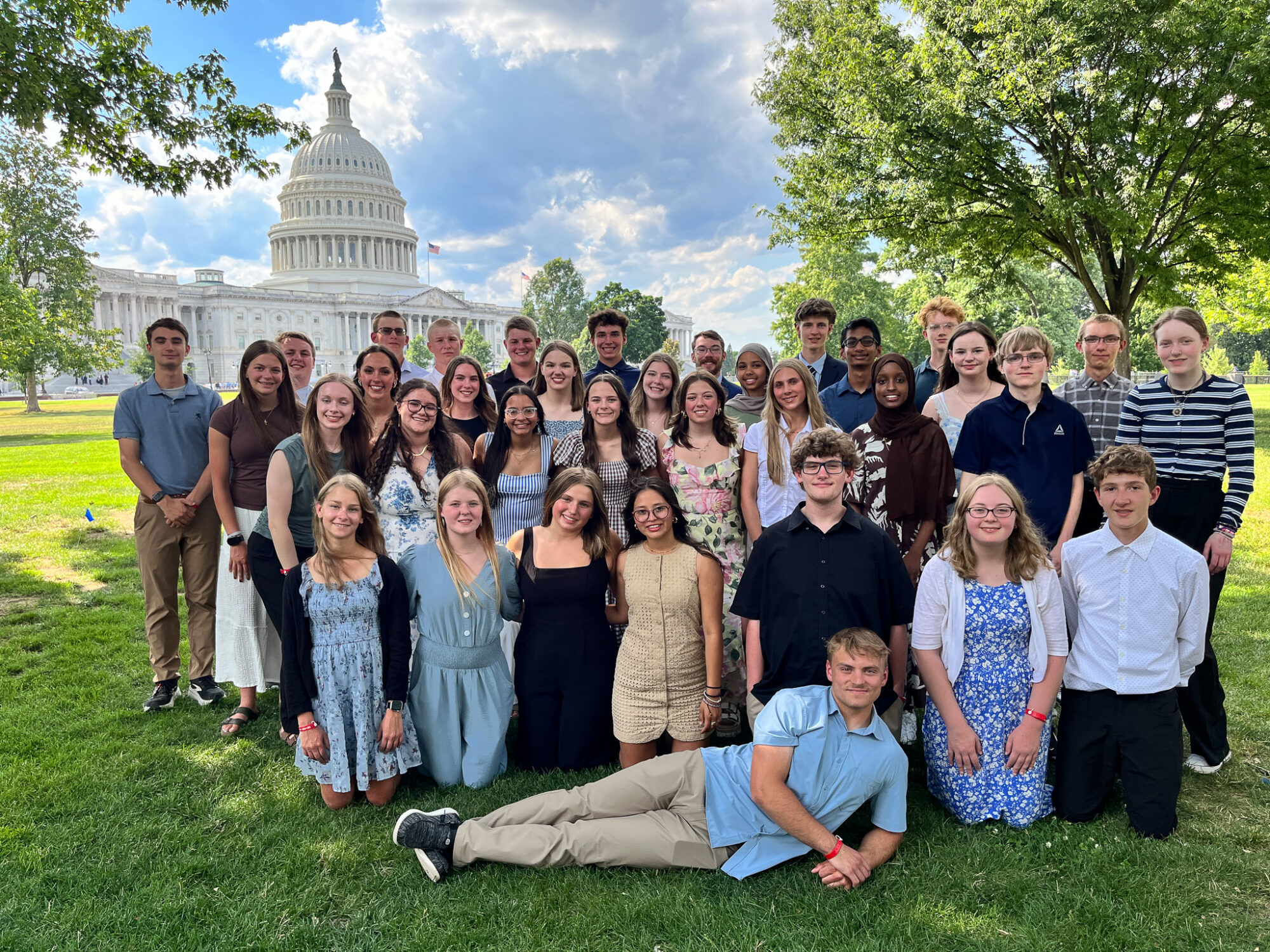
The next summer, 34 students from Iowa made the first trip. Other states soon followed, including Minnesota in 1966. Today, electric cooperatives in nearly every state send delegations to the capital each June. Nearly 100,000 students have participated over the years, including about three dozen from Minnesota each summer.
Minnesota students now join roughly 1,800 peers from across the country for the annual Youth Tour in Washington, D.C. Throughout the week, they take part in sessions on the cooperative model, American government and leadership development, while also hearing from inspirational speakers.
A Lasting Impact
Students describe Youth Tour as a memorable and meaningful trip of a lifetime. Some return home inspired to pursue public service, while others apply what they learned by becoming stronger leaders and more engaged community members.
Over time, some Youth Tour alumni even reconnect with their local electric cooperatives as employees, board members or engaged member-owners.
Electric cooperatives took shape in the 1930s because many rural communities had been left without service. When investor-owned utilities chose not to extend power to rural America, farmers and neighbors organized, pooled their resources and built the lines themselves. That same spirit of local action continues to define cooperatives today.
Cooperatives are owned by the members they serve and led by boards elected from within those communities. Programs like Youth Tour reflect the same commitment to local engagement and democratic participation that has kept the cooperative model strong for nearly a century. Each June, the students who travel to the nation’s capital serve as an annual reminder of what sets cooperatives apart.